How Focal Length Affects DOF: Simulator & Calculator Guide
Have you ever wondered why some photographs have a beautifully soft, blurry background that makes the subject pop, while others are sharp from the closest flower to the farthest mountain? While many photographers point to aperture as the main control, another equally powerful tool is hiding in plain sight: your lens's focal length.
Understanding how focal length affects Depth of Field (DOF) is a game-changer. It helps any photographer move from taking snapshots to creating intentional, professional-looking images. This guide will demystify the relationship between them. We'll explore the science in simple terms and show you how to master it in practice. Most importantly, we'll introduce you to an incredible tool that acts as your personal "simulator," allowing you to experiment with these concepts risk-free. Get ready to predict your results before you even press the shutter with our interactive DOF Calculator.
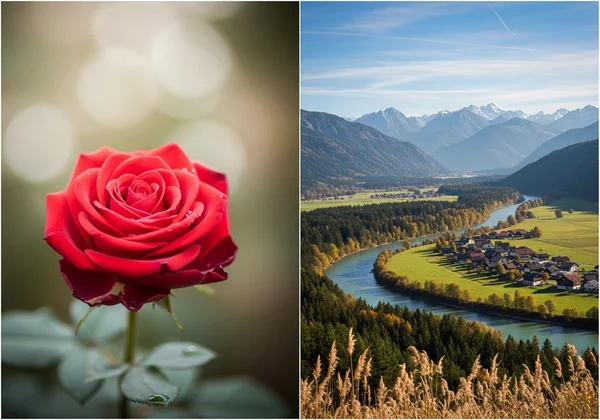
Understanding Focal Length's Impact on Depth of Field
Depth of field refers to the area in your image that appears acceptably sharp. A "shallow" DOF means only a small sliver is in focus (perfect for portraits), while a "deep" DOF means a large area is sharp (ideal for landscapes). While aperture (the f-stop) is a direct way to control this, focal length works in a more indirect but profoundly creative way. It changes your field of view, magnification, and perspective, all of which dramatically influence your final depth of field.
The Fundamental Relationship: Focal Length, Magnification & Perspective
Think of focal length as your lens's level of "zoom." A wide-angle lens (like 24mm) has a short focal length and sees a broad scene. A telephoto lens (like 200mm) has a long focal length and magnifies a small, distant part of that scene.
Here's the key: the longer the focal length, the greater the magnification. When you magnify a subject, you also magnify the background. This magnification compresses perspective. The background looks closer and bigger. That's why longer focal lengths create shallower DOF – even at the same aperture and distance.
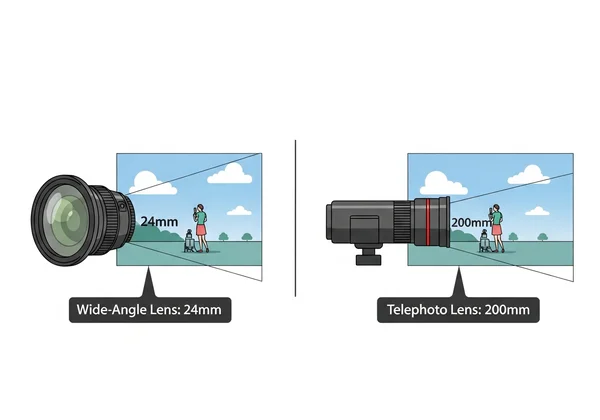
Wide-Angle Lenses: Maximizing Your Deep Depth of Field
Wide-angle lenses, typically those with a focal length of 35mm or less, are the masters of deep depth of field. Because they don't magnify the scene very much, they inherently capture a wider zone of sharpness.
This makes them the go-to choice for genres where you want everything in focus:
- Landscape Photography: Capturing the entire scene, from the foreground rocks to the distant mountains, in crisp detail.
- Architectural Photography: Ensuring the whole building is sharp and lines are straight.
- Astrophotography: Keeping both the starry sky and the foreground elements in focus.
With a wide-angle lens, it's much easier to achieve that front-to-back sharpness that gives landscape photos their epic sense of scale.
Telephoto Lenses: The Power of Shallow Focus & Compression
On the other end of the spectrum are telephoto lenses, which usually start around 85mm and go much higher. These are your tools for creating separation and drama. As we discussed, their high magnification is the secret to achieving a beautifully shallow depth of field.
Telephotos zoom in to isolate your subject. They magnify and compress the background. Colors and shapes blend into a creamy blur. This is why portrait photographers love lenses like the 85mm, 135mm, and 200mm—they effortlessly melt backgrounds away, forcing all the viewer's attention onto the person in the frame.
Experimenting with the Focal Length DOF Calculator
Reading about theory is one thing, but seeing it in action is what truly builds understanding. This is where a powerful tool comes into play. Instead of spending thousands on different lenses, you can simulate their effects instantly. Our online tool lets you visualize these changes in real-time.
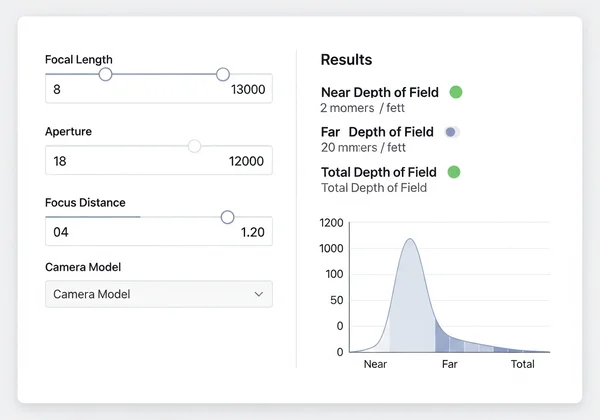
Step-by-Step Simulation: Manipulating Focal Length Parameters
Let's run a quick experiment. Imagine you are setting up for a portrait.
- Go to the Calculator: Open the DOF simulator on our homepage.
- Set Your Camera: Choose your camera model from the dropdown (e.g., a full-frame like a Sony A7 III).
- Lock in Settings: Set your aperture to f/2.8 and your focus distance to 10 feet (about 3 meters).
- Change Focal Length: Now, click and drag the "Focal Length" slider. Start at a wide 35mm. Watch the results on the right. Now, slowly slide it up to a classic portrait length of 85mm. Finally, push it further to a telephoto 135mm.
Notice how the "Total Depth of Field" value plummets. What was once several feet of sharpness at 35mm has shrunk to mere inches at 135mm, all without touching the aperture or moving your feet.
Visualizing Changes: Near, Far & Total Depth of Field
Numbers are helpful, but the real magic happens in the "Depth of Field Visualization" chart at the bottom of the page. This graph gives you an intuitive, visual representation of your focus zone.
As you slide the focal length from wide to telephoto in the experiment above, you'll see the blue "in-focus" area on the chart shrink dramatically. It transforms from a wide, forgiving block into a razor-thin line. This feature makes the abstract concept of DOF tangible. It helps you see exactly how much room for error you have and how much of your subject will be sharp.
Predicting Outcomes for Portraits, Landscapes & Macro Shots
This simulation ability is not just a learning exercise; it's a powerful planning tool for real-world photoshoots.
- Portrait Planning: Before a shoot, you can determine if an 85mm lens at f/1.8 will give you enough DOF to get both of your subject's eyes in focus, or if you need to stop down to f/2.8.
- Landscape Planning: You can input your 16mm wide-angle lens settings to calculate the hyperfocal distance, ensuring your epic vista is perfectly sharp from front to back.
- Macro Planning: See just how tiny your depth of field will be when shooting a close-up of a flower and plan your focus stacking accordingly.
Practical Applications: Mastering Shallow DOF with Telephoto Lenses
One of the most sought-after skills in photography is creating that dreamy background blur, also known as "bokeh." While a wide aperture is crucial, pairing it with the right focal length is the professional's secret.
Achieving Dreamy Background Blur for Stunning Portraits
To create a world-class portrait, you need to make your subject the undeniable hero of the image. A long focal length is your best friend here. I’ve found this to be true on countless shoots; an 85mm lens can transform a cluttered park into a soft, beautiful backdrop.
Here's a classic recipe for amazing background blur:
- Choose a Telephoto Lens: Something 85mm or longer.
- Use a Wide Aperture: Set your f-stop as low as it will go (e.g., f/1.4, f/1.8).
- Manage Your Distances: Get relatively close to your subject while ensuring there is plenty of distance between them and the background.
Using our DOF simulator can help you perfect this balance. You can pre-visualize how a change in focal length or distance will transform a busy background into a beautiful, abstract wash of color.
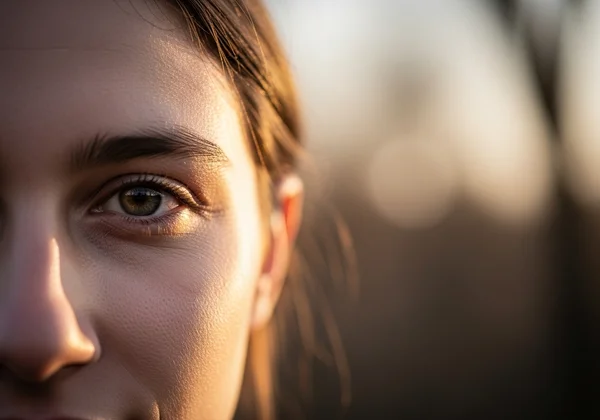
Isolating Distant Subjects in Wildlife & Sports Photography
In wildlife and sports photography, you often can't choose your background. A telephoto lens becomes essential not just for reaching your subject, but for erasing distractions. A 400mm lens can isolate a bird from a messy tangle of branches or a single player from the chaotic crowd behind them. The extreme focal length compresses that background so effectively that it simply melts away, leaving your subject in sharp, clear focus.
Beyond Aperture: Combining Focal Length with Focus Distance
Master DOF by juggling three factors: aperture, focal length, and subject distance. Get closer to your subject? DOF gets shallower – no matter the rest.
A 50mm lens might produce a deep depth of field when focused on something 30 feet away. But if you use that same 50mm lens for a tight headshot from 3 feet away, the depth of field will become incredibly shallow. By experimenting with all three of these variables in our calculator, you can develop an intuitive feel for how they work together, giving you complete creative control in any situation.
Your Journey to DOF Mastery Starts Here
Understanding the powerful influence of focal length on depth of field is a critical step in your photographic journey. Wide-angle lenses push backgrounds away to create deep, expansive scenes. Telephoto lenses pull backgrounds closer, compressing and blurring them into a beautiful backdrop.
Theory only sticks when you play with it hands-on. You now have the knowledge to control not just how much is in focus, but the entire feel and perspective of your image.
Ready to put theory into practice? Head over to our DOF Calculator and start experimenting with different focal lengths today! See the real-time changes, visualize your perfect shot, and build the confidence to capture stunning images every time.
Frequently Asked Questions About Focal Length & Depth of Field
What is Depth of Field (DOF) in Photography?
Shallow DOF: Tiny sharp zone, blurry backgrounds. Deep DOF: Everything from near to far stays crisp.
Does Focal Length Affect How Blurry My Background Is?
Yes, absolutely. A longer focal length (like 200mm) magnifies the background and compresses the scene, which results in a much shallower depth of field and a more blurred background compared to a wide-angle lens (like 24mm) from the same position.
How Does Aperture Intersect with Focal Length for DOF Control?
Aperture and focal length work together as powerful partners. For the maximum background blur, you combine a long focal length (e.g., 135mm) with a wide aperture (a low f-number like f/1.8). For maximum sharpness throughout a scene, you combine a short focal length (e.g., 16mm) with a narrow aperture (a high f-number like f/11). You can see exactly how they interact with our online tool.
What's the best focal length for deep depth of field?
Wide-angle lenses are the best choice for achieving a deep depth of field. Focal lengths between 14mm and 35mm are ideal for genres like landscape and architectural photography, where the goal is often to keep the entire scene sharp from the foreground to the background.